Red light therapy has long been known for supporting skin health and muscle recovery, but a growing body of photobiomodulation research is now looking at something different: whether clinicians can incorporate red light therapy for mental health treatment.
Red and near-infrared light has the potential to support mood, ease anxiety, and reduce depressive symptoms. The evidence is still early, but it’s increasingly being explored as a complementary approach for mental health care.
This guide covers what the research actually shows, how red light therapy is thought to affect mood and the brain, and how it’s used as part of our residential treatment program at Red Top Wellness Center.
FAQs About Red Light Therapy
What is Red Light Therapy?
Red light therapy, also known as low-level laser therapy (LLLT) or photobiomodulation, is a non-invasive treatment that uses specific wavelengths of red and near-infrared light to stimulate cellular function. It works by delivering specific wavelengths of light deep into the skin, where they reach the mitochondria, which are the energy centers of your cells.
This light activates your body’s natural ability to heal by stimulating the production of cellular energy, helping your body repair damage, reduce inflammation, and function more efficiently. At the cellular level, this process increases the production of adenosine triphosphate (ATP), the energy source that powers nearly every function in the body.
When mitochondria absorb red light, they produce more ATP, giving cells the fuel they need to repair, regenerate, and perform at their best. The result is faster tissue recovery, reduced oxidative stress, and improved cellular performance.
How is Red Light Therapy Administered?
Red light therapy devices come in various forms, each designed to cater to different needs and preferences. Common types include:
- Panels are typically used for full-body treatments and are often found in professional settings like wellness centers and clinics. They can cover large areas of the body, making them ideal for comprehensive therapy sessions.
- Handheld devices are more portable and convenient for targeted treatments. They are perfect for addressing specific areas like the face, joints, or localized pain points.
- Wearable gadgets are designed for hands-free use and can be worn on specific parts of the body, such as the face, neck, knees, or back. These devices offer flexibility and ease of use, allowing you to continue daily activities while receiving treatment.
Although numerous red light therapy devices have been deemed safe by the Food and Drug Administration (FDA), it’s essential to receive this treatment from a trained professional. Medical experts recommend against seeking red light therapy at spas or salons, as staff at these facilities may not be qualified to administer this treatment correctly.
What are the Benefits of Red Light Therapy?
Skin Health and Anti-Aging
One of the most celebrated benefits of red light therapy is its positive impact on skin health and anti-aging. Benefits of red light therapy for skin health include:
- Collagen production: Collagen is a crucial protein that provides structure and strength to the skin, and its production naturally decreases with age. By stimulating collagen production, red light therapy helps to improve skin elasticity and firmness, reducing the appearance of wrinkles, fine lines, and scars.
- Blood circulation: Red light therapy enhances blood circulation, which delivers essential nutrients and oxygen to the skin cells. As a result, it boosts skin cells’ health and vitality.
- Inflammation reduction: The anti-inflammatory properties of red light therapy help to calm irritated skin and reduce redness, while its regenerative effects promote faster healing of blemishes and scars. This makes it an effective treatment for various skin conditions, including acne, rosacea, and eczema.
By addressing multiple aspects of skin health, red light therapy offers a comprehensive solution for achieving a clearer, healthier complexion.
Pain Relief and Muscle Recovery
Red light therapy is also highly regarded for its pain-relieving and muscle-recovery benefits. It works by penetrating deep into the tissues, where it helps to reduce inflammation and promote cellular repair.
By decreasing inflammation and enhancing blood flow to the affected areas, red light therapy helps to alleviate pain and improve mobility, providing relief for those suffering from persistent discomfort. This makes it an effective treatment for conditions such as arthritis, tendonitis, and other chronic pain issues.
Red light therapy may also be paired with other holistic approaches known for pain management, such as biosound therapy techniques, in a comprehensive treatment plan.
Mood and Brain Function
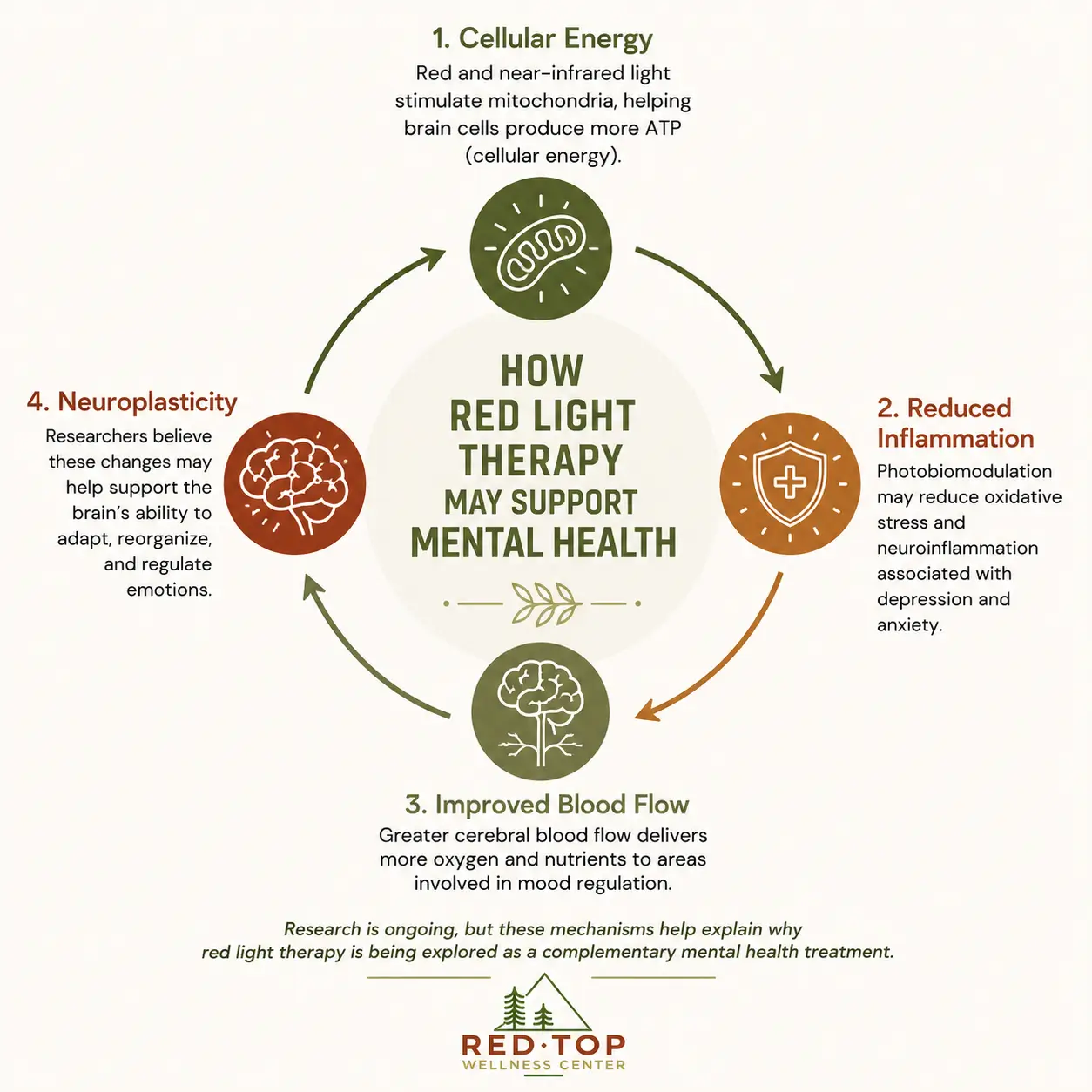
For mental health applications, researchers are especially interested in near-infrared wavelengths (commonly in the 800–850nm range) that can penetrate the skull and reach cortical tissue. The proposed mechanisms include:
- Improved cerebral mitochondrial function, giving brain cells more usable energy
- Reduced neuroinflammation and oxidative stress, both of which are elevated in depression and anxiety
- Increased cerebral blood flow, supporting nutrient and oxygen delivery to affected brain regions
- Possible support for neuroplasticity, the brain’s ability to form and reorganize neural connections
These findings suggest that red light therapy could have powerful impacts on mood and emotional regulation. In fact, red light therapy may lead to improvements in overall mental health, including reduced anxiety and enhanced cognitive function
What Should I Expect From a Red Light Therapy Session?
Red light therapy sessions are non-invasive and typically painless, with most people experiencing no discomfort. In cases where a full-body bed or pod is employed that uses red and near-infrared light, you might feel a mild warmth emanating from the near-infrared bulbs.
Most experts recommend starting with short sessions of 10 to 20 minutes, two to three times per week. As your body adapts to the therapy, you can gradually increase the duration and frequency of sessions. It’s also essential to maintain a consistent schedule to achieve the best results.
To maximize the benefits of red light therapy, it’s important to follow proper guidelines for frequency and duration of sessions. Best practices for using RLT include:
- Positioning the device at the recommended distance from the skin
- Ensuring that the treated area is clean and free of any products that could block light penetration
- Protecting your eyes from direct exposure to the light, especially when using high-intensity devices
- Consulting a healthcare professional before starting treatment, especially if contraindications, such as certain medications that increase light sensitivity, apply
During the treatment, you should take precautions to protect your eyes. Always inquire with the practitioner if it’s necessary to wear eye protection. Apart from the potential physical benefits, a significant perk of red light therapy is the tranquility it provides. Many patients feel relaxed post-treatment, so consider this an opportunity to indulge in self-care and the calming effects.
Post-treatment, you may require more than one session. Discuss with your therapist in advance about the number of treatments you will need and their frequency to fully comprehend the scope and duration of the treatment. This can vary significantly based on the health concern you’re addressing.
The Science Behind Red Light Therapy for Mental Health
Red light therapy is one form of a broader technique called photobiomodulation (PBM), the use of low-level red or near-infrared light to influence cellular activity. When PBM is aimed at the head to affect brain tissue directly, it’s called transcranial photobiomodulation (tPBM), and this is the form most of the recent mental health research focuses on, rather than general full-body panels.
Recent studies have explored novel applications of red light therapy, such as treatment for:
- Depression: A 2026 meta-analysis in the Journal of Affective Disorders reinforced that depressive symptoms improve with PBM intervention. Another study found that people with major depressive disorder saw improvements in both depressive symptoms and sleep with the use of a wearable, self-administered tPBM device.
- Anxiety: Research by BMC Psychiatry tested tPBM in patients undergoing methadone maintenance treatment and found statistically significant reductions in both anxiety and depression scores.
- Obsessive-compulsive disorder (OCD): Inflammatory processes have been associated with the development of OCD, and studies suggest that tPBM could mitigate this by regulating oxidative stress and immune cell function.
While more research is needed to fully understand the mechanisms and long-term effects of red light therapy for mental health, the existing evidence is promising. For more information about the application of red light therapy on certain mental health conditions, check out the following guides:
- Does Red Light Therapy Help With Depression? Learn How Here
- Red Light Therapy For Anxiety: Benefits Backed by Science
- Red Light Therapy for OCD: Why It May Be Used in Treatment
In short, current research supports red light therapy as a reasonable complementary option worth discussing with a provider, which is why we treat it as one tool within a broader care plan at Red Top Wellness Center.
How Red Top Wellness Center Uses Red Light Therapy for Mental Health Treatment
At Red Top Wellness Center, red light therapy is offered as one component of a broader, personalized treatment plan. Whether you’re visiting our facility for inpatient anxiety treatment, a dual diagnosis, or something else, our clinical team will be able to help you decide whether red light therapy could be a valuable part of your healing journey. It’s always under professional supervision and alongside the core therapies that make up each person’s individualized plan.
We’re proud to offer this innovative treatment alongside other evidence-based therapies as part of our commitment to providing holistic care. Our focus is on addressing the root causes of mental health disorders and empowering everyone who walks through our doors to live happier, healthier lives. Red light therapy can be an effective part of a comprehensive treatment plan, relieving symptoms and aiding overall wellbeing.
If you’re curious whether red light therapy could fit into your treatment, our team can walk you through what that looks like and what to realistically expect.